Smart Access Control
A Computer Engineering thesis prototype that connected Flutter guest and admin mobile flows to RFID room access, Raspberry Pi hardware, Supabase/PostgreSQL, and MikroTik MAC-address Wi-Fi provisioning. Built by a three-student team, the system explored how hotels could reduce front-desk friction through contactless access, automated internet access, service requests, and management dashboards.
- Type
- Academic Prototype · Mobile + IoT
- Role
- Team Thesis Project - Flutter / IoT
- Built
- 2024
- Client
- Computer Engineering thesis
Problem and goal
Hotels often split the guest journey across front-desk check-in, physical room keys, manual Wi-Fi passwords, and separate service-request channels. For our Computer Engineering thesis, we wanted to prototype a more connected flow: a guest selects a room and RFID card through a Flutter app, uses the card at the room, and gets access to both the door and the internet with less staff intervention.
This was an academic prototype rather than a commercial hotel deployment, so the goal was not to claim production maturity. The goal was to prove the system behavior end to end: mobile app, backend records, RFID scan, Raspberry Pi control, electric strike lock, and MikroTik Wi-Fi authorization all working as one flow.
System architecture
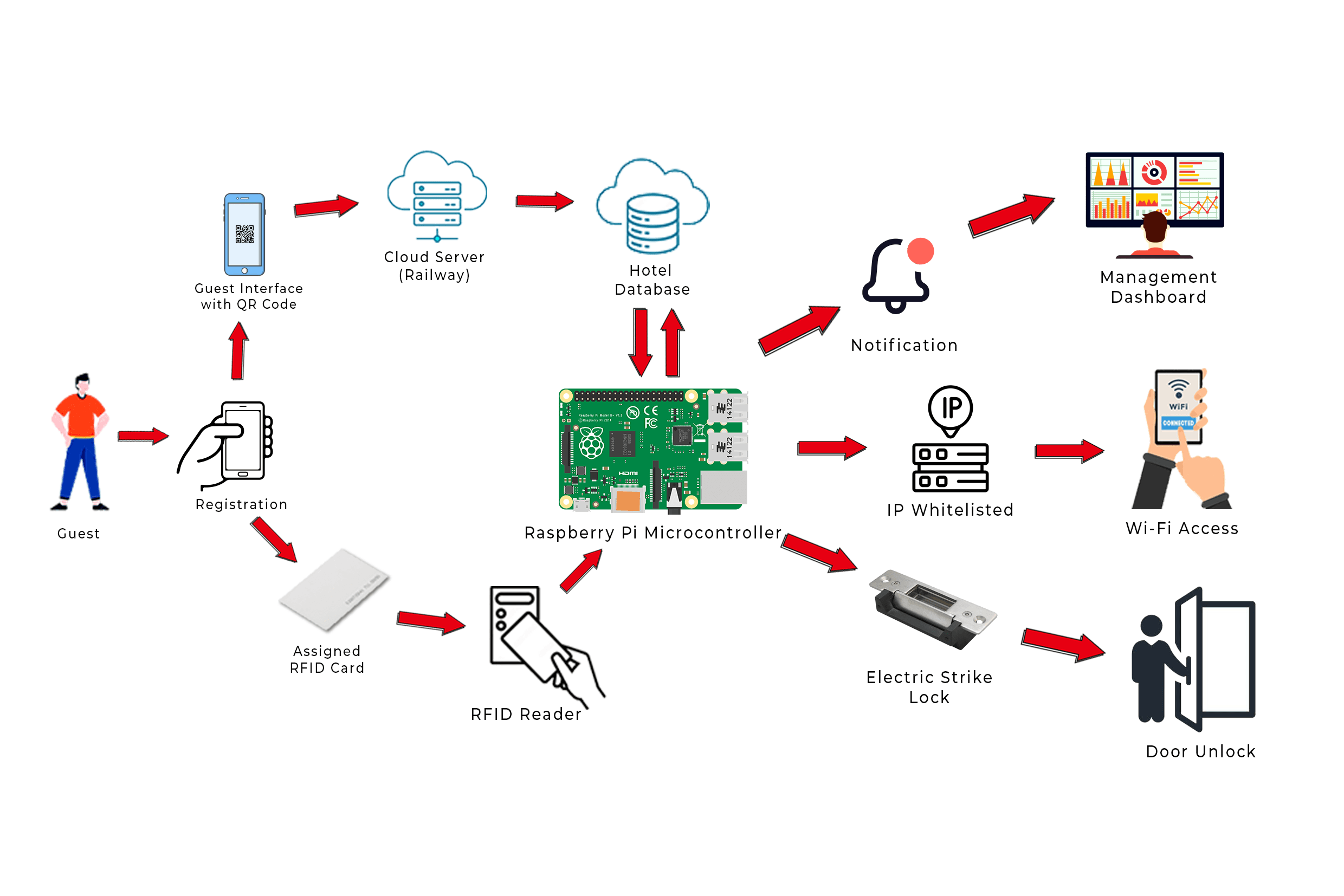
The system combined two layers: a hardware-based door access system and a full-stack mobile application suite. The guest starts in the SAC Access App, registers or logs in, selects an available room, and links an RFID card to the booking.
At the door, the RFID reader sends the card UID to the Raspberry Pi, which validates the card against backend records stored in Supabase/PostgreSQL. When authentication succeeds, the Raspberry Pi triggers the electric strike lock and the backend updates the guest network status so the MikroTik router can grant internet access.
Flutter mobile experience
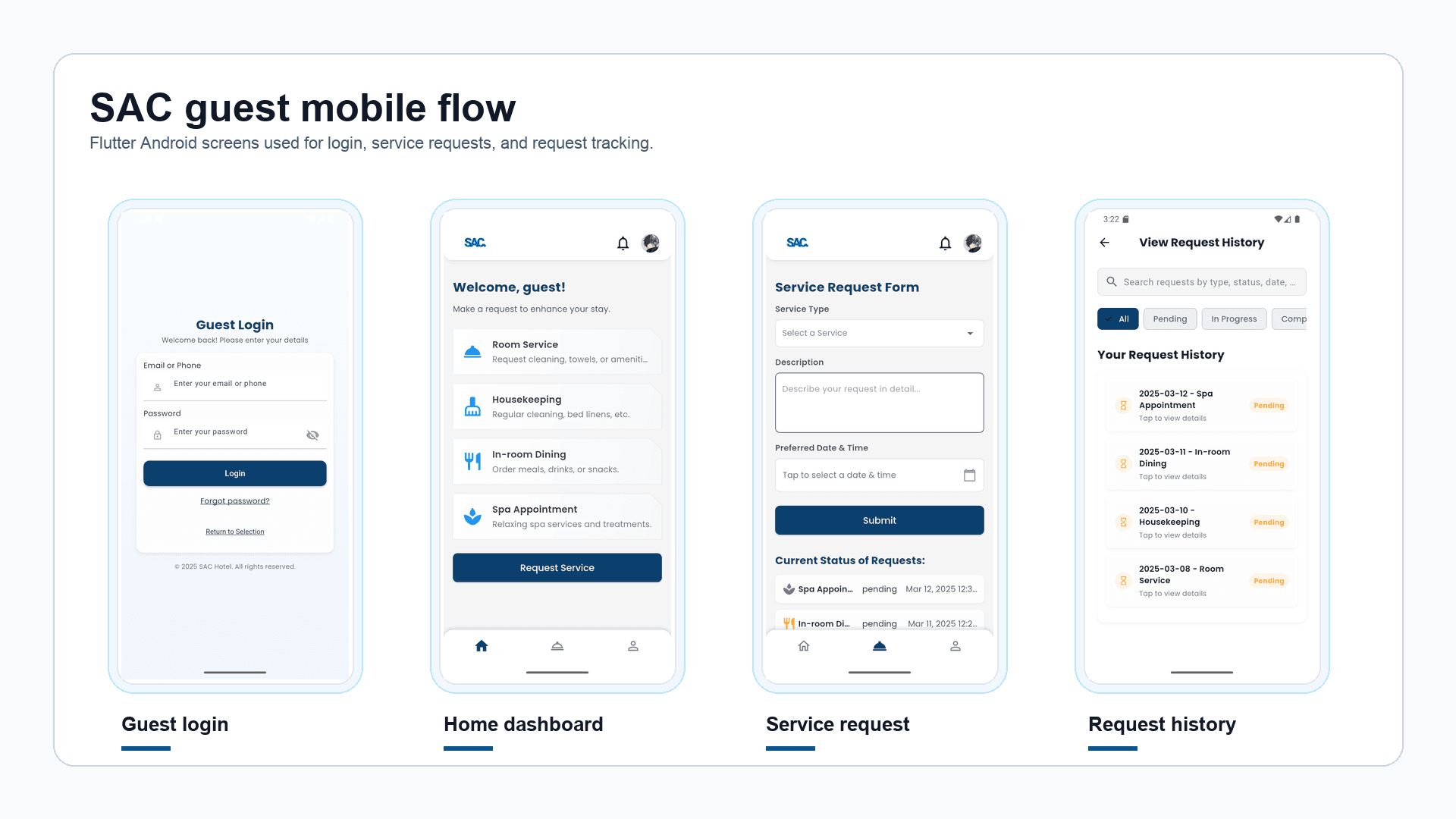
The Flutter work centered on two user experiences. The access flow handles guest onboarding, room selection, RFID card assignment, and Wi-Fi preparation. The service flow gives checked-in guests a way to request housekeeping, room service, in-room dining, or spa appointments, then track request status from the app.
The admin side supports hotel operations: service-request monitoring, room and guest context, RFID lifecycle management, and system logs. For interviews, this is the clearest Flutter proof because it is not just static screens; the mobile interface is tied to a hardware and backend flow.
Hardware prototype
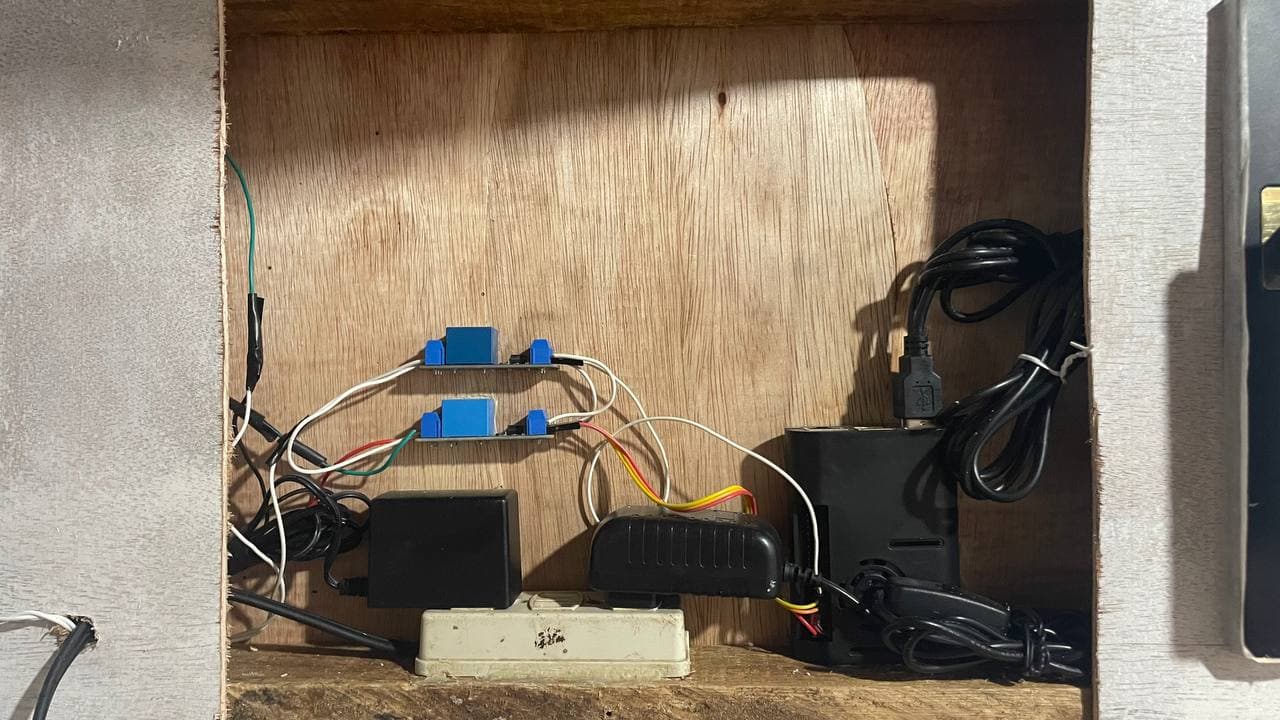
The physical prototype used a Raspberry Pi 4 as the core controller, an RFID reader for room-card scans, a relay module, an electric strike lock, and a MikroTik router for network control. That hardware layer made the thesis more than a mobile UI demo: the app actions had visible effects on a real door prototype.
The most interesting integration was the Wi-Fi flow. A guest first connects through a controlled network path so the system can identify the device, then the backend and router update authorization after the first valid RFID scan. The door access and internet access become part of the same guest-entry moment.
Validation and lessons
The prototype was tested against practical performance targets. The system measured 178.25 ms average door-unlock speed, 458.02 ms average Wi-Fi auto-connect time, 100% RFID tag accuracy, and zero RFID errors in the recorded test set. Unlock reliability reached 96.67%, which was strong for a student prototype but also gave us a clear future-improvement area.
The main lesson was systems thinking. A mobile app feels simple on screen, but in this project every tap depended on backend state, hardware signals, network behavior, and real-world timing. That made it a useful foundation for explaining how I approach Flutter work today: build the interface, understand the full flow behind it, and verify with real behavior instead of only screenshots.
Tern
Describe your trip. Tern plans it - mapped, paced, and every pick explained.
Mobile App · iOS & AndroidHave a project in mind? Let's build it.
I'm available for freelance projects, and open to the right full-time role.
I build web apps, SaaS, and MVPs for founders and startups. Tell me what you're working on.